In today's rapidly digitalizing world, the customer journey no longer begins on the street where your physical store is located—it starts on a smartphone search screen. Before leaving home, most consumers search for terms like "coffee shops near me," "nearest insurance agency," or "authorized service center nearby," making purchasing decisions within seconds. This is exactly where Google Business Profile (GBP) becomes the digital front door of every business.
Managing a Google Business Profile may be a simple daily task for an independent business with a single location. However, for franchise networks, dealer organizations, and multi-location brands operating 100, 500, or even 1,000 locations, keeping every profile accurate, consistent, and engaging requires a completely different operational approach.
Manually maintaining hundreds of addresses, phone numbers, business hours, customer reviews, and local updates inevitably leads to inefficiencies and inconsistencies. With the right strategy and technology, however, this challenge can become one of your brand's strongest drivers of local growth.
In this comprehensive guide, we'll explore how enterprise brands can manage their local digital presence from a single centralized platform while maintaining scalability, operational efficiency, and a consistent customer experience across every location.
1. The Three Pillars of Local SEO for Multi-Location Businesses
Google's local search algorithm evaluates businesses based on three primary ranking signals:
Multi-location brands often have a significant advantage when it comes to Prominence thanks to their established brand awareness. However, Relevance and Distance must be earned individually by each location.
When someone performs a local search, every branch must send the right signals to Google in order to appear in the Local Pack—the highly visible map results shown at the top of search results. If your business operates 100 locations, Google essentially evaluates your brand as 100 individual local businesses.
That is why every location requires a standardized profile enriched with localized information. A centralized management system makes it possible to optimize these three ranking factors consistently across every branch while ensuring that each location remains relevant to its own local audience.
2. Perfect NAP Consistency: Building a Strong Foundation
In local SEO, NAP (Name, Address, Phone Number) consistency remains one of the most critical ranking factors. A brand's digital credibility depends heavily on the accuracy and consistency of its business information.
For large dealer networks and franchise organizations, address changes, new phone numbers, holiday schedules, and temporary operating hours are common occurrences. Imagine a customer arriving at your Istanbul location because Google says you're open until 10:00 PM, only to discover the branch actually closed at 8:00 PM. That disappointing experience can quickly turn into a one-star review and a damaged brand reputation.
How to Scale It
Single Source of Truth
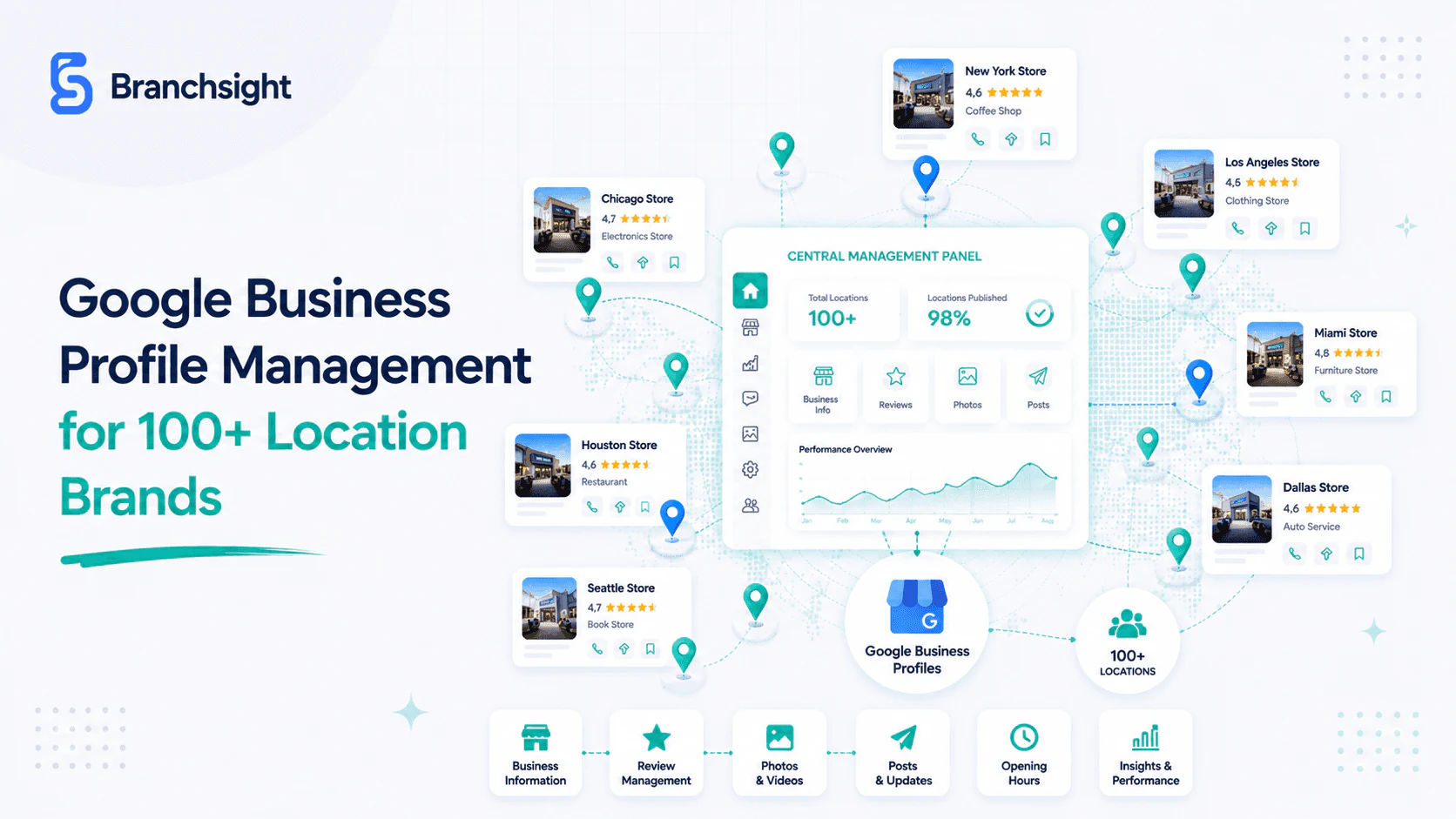
Replace spreadsheets and disconnected systems with a centralized platform integrated directly with Google's APIs. This enables your headquarters to update business hours, holiday schedules, or contact information once and instantly synchronize those changes across every Google Business Profile.
Role-Based Access Control
Maintain brand consistency by keeping critical business information—such as business names, primary categories, and official addresses—under central management, while allowing local managers limited permissions for tasks like uploading branch-specific photos or responding to location-specific activities. This balance provides operational flexibility without sacrificing brand integrity.
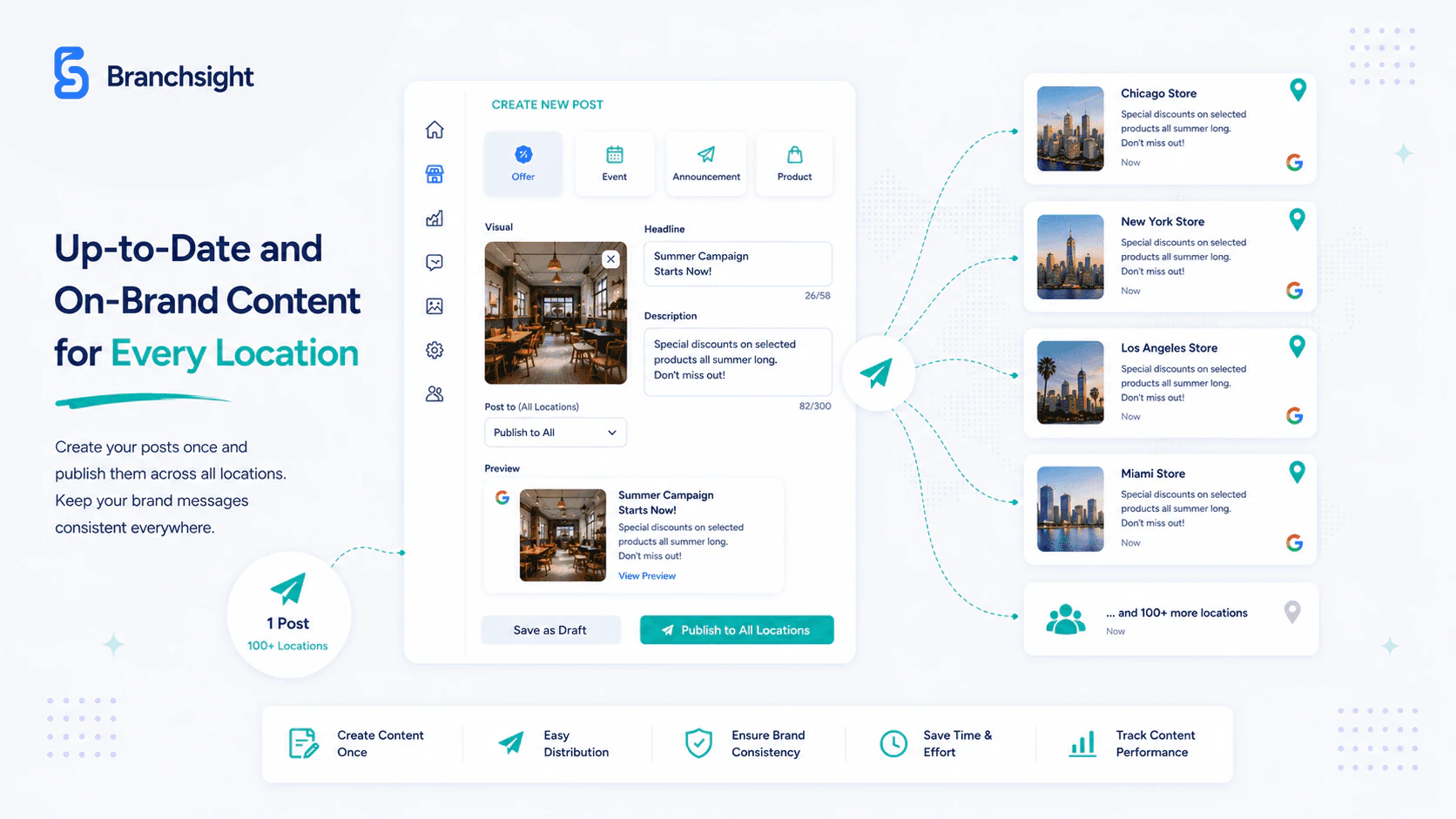
3. Scaling Content Management: Creating a Living Brand at Every Location
A Google Business Profile is far more than a static business listing—it's a dynamic micro-content platform. Features such as Google Posts, Products, and Services allow brands to engage potential customers directly on Google's search results page, often before they even visit the company website.
Google also favors active businesses. Profiles that are regularly updated with fresh posts, promotions, photos, and relevant information are more likely to perform well in local search results than inactive profiles.
For a brand with 100 or more locations, however, producing and publishing unique content for every branch every week can seem impossible. This is where automation becomes essential.
How to Scale It
Dynamic Content Templates
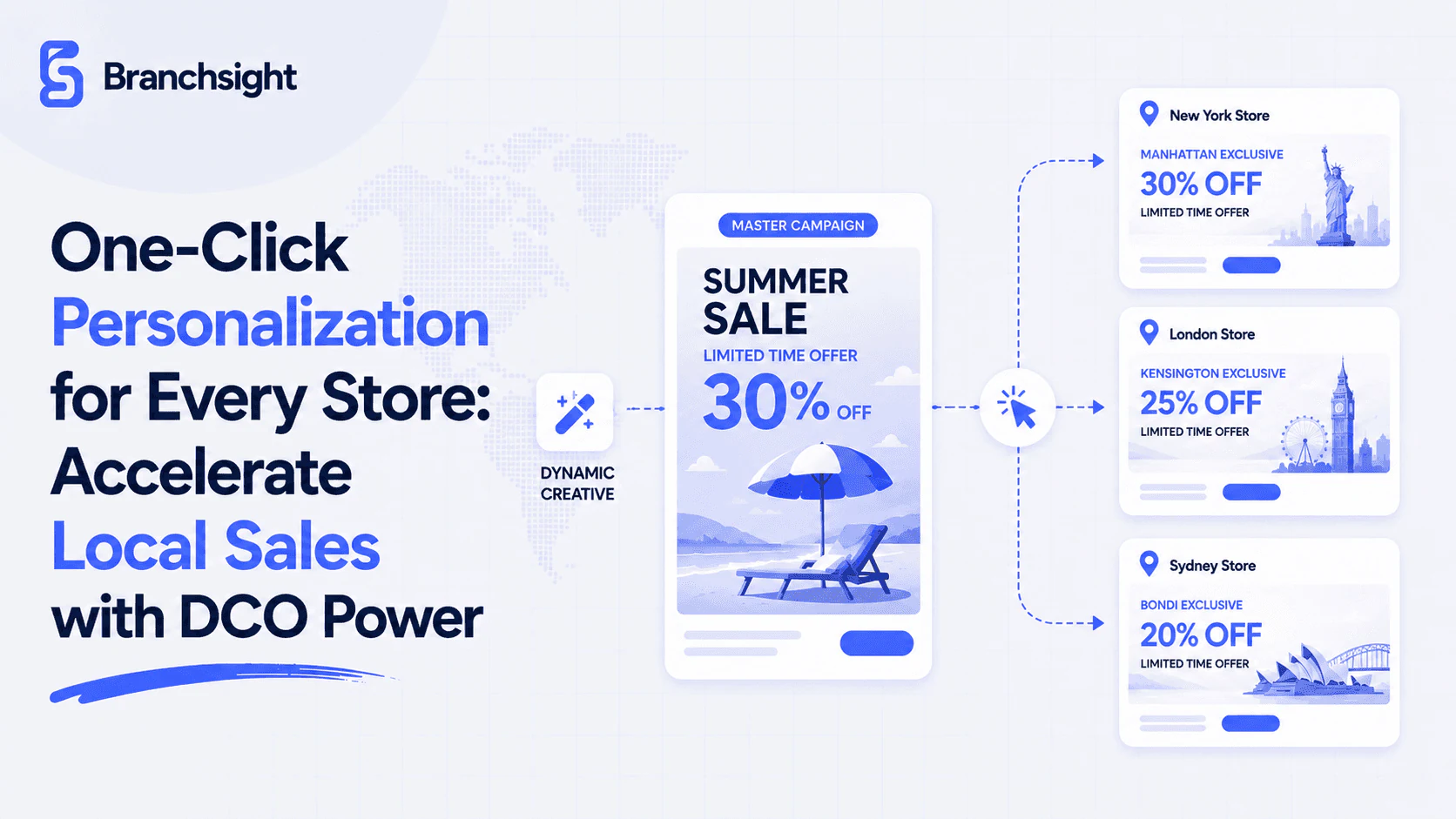
Your corporate marketing team can create a single campaign—for example, a nationwide Spring Promotion. A scalable content management system can automatically personalize that campaign by inserting each branch's name or local information before publishing it across every Google Business Profile.
Instead of creating hundreds of separate assets, one campaign can instantly become:
"Spring Offers Available at Our Miami Branch!"
"Spring Savings Now at Our New York Branch!"
Each post feels locally relevant while preserving brand consistency across the entire network.
Content Scheduling
Just as you plan your social media calendar weeks or months in advance, your Google Business Profile posts should also be scheduled ahead of time.
Centralized scheduling enables every location to stay active without placing additional workload on branch managers. Marketing teams maintain complete control while ensuring every profile consistently publishes fresh, relevant content.
4. Reputation Management: Turning Customer Feedback into Brand Trust
Today, nearly 90% of consumers read Google reviews before visiting a business or making a purchasing decision. For multi-location brands, reviews are much more than customer feedback—they are one of the most valuable sources of local market intelligence.
Many organizations view review management as a reactive process that only becomes important during customer complaints. In reality, it is one of the most effective ways to transform satisfied customers into brand advocates. Responding promptly and professionally to negative reviews doesn't only help recover a dissatisfied customer—it also sends a powerful message to every future visitor viewing that profile:
"We listen to our customers, and we genuinely care about their experience."
How to Scale It
Centralized Review Management
Rather than switching between hundreds of individual Google Business Profiles, consolidate every review from every location into a single dashboard. A centralized review inbox allows your customer experience or marketing teams to monitor, prioritize, and respond to feedback efficiently across the entire organization.
Many customer reviews follow similar patterns—positive feedback, questions about business hours, appointment requests, or recurring concerns. Instead of writing every response from scratch, create dynamic response templates that reflect your brand's tone of voice while allowing room for personalization.
Artificial intelligence can further streamline this process by:
The goal is not to replace human communication, but to help teams respond faster, more consistently, and with greater empathy.
When customers feel heard and valued, review management becomes more than a support function, it becomes a competitive advantage that strengthens trust and reinforces your brand reputation at every location.