Today's rapidly evolving digital consumer behavior has shifted competition from the global stage to the streets, neighborhoods, and cities where customers actually live. Building nationwide brand awareness alone is no longer enough to drive immediate purchasing decisions. Consumers expect to find the nearest and most relevant solution the moment a need arises.
This is exactly where location-based marketing strategies become a game changer for multi-location brands, dealer networks, franchises, and distributors. Instead of delivering generic campaigns with identical messages to every audience, brands now need hyperlocal strategies that speak directly to consumers based on their precise location.
But how can your brand transform its national strength into local market dominance?
In this guide, we'll explore how to increase regional visibility, convert store visits into sales, and outperform competitors through a powerful multi-location digital marketing strategy.
Why Is Local Advertising So Important for Dealers?
Large-scale national branding campaigns certainly strengthen brand perception, but when it comes to generating real sales, the battle is won at the local level.
The greatest advantage of local advertising is its ability to reach consumers with the highest purchase intent precisely when they are actively searching for a nearby solution. When users perform location-specific searches, they are far more likely to visit or purchase from one of the first businesses they encounter.
This behavior makes local advertising significantly more effective than broad, untargeted campaigns. Moreover, businesses that rely solely on physical storefronts are becoming increasingly invisible in today's digital-first marketplace. Strategic visibility across Google Search and Google Maps enables dealerships to appear exactly where potential customers are looking.
Rather than competing against national brands with massive advertising budgets, local campaigns allow businesses to dominate their own geographic market. By focusing advertising efforts within just a few kilometers of each location, brands maximize budget efficiency while reaching the audience most likely to convert.
Beyond performance, proximity also builds trust. Consumers naturally feel more confident purchasing from businesses located nearby, making local advertising one of the fastest ways to establish credibility in the digital space.
Location-Based Advertising & Hyperlocal Marketing
Location-based advertising has evolved far beyond targeting an entire city or district. Thanks to the widespread use of smartphones, brands can now deliver highly precise, real-time marketing experiences based on a consumer's exact location.
At the most advanced level, hyperlocal marketing enables businesses to target audiences at the level of individual streets, neighborhoods, or even specific buildings.
Combined with geofencing technology, brands can create virtual boundaries around stores, event venues, or even competitors' locations. Whenever users enter these designated areas, they can instantly receive personalized offers and promotions designed to drive foot traffic directly to nearby stores.
The importance of "near me" searches on Google Maps continues to grow every year. These users are already at the bottom of the purchase funnel and are actively looking for an immediate solution. Appearing prominently through Google Maps advertising is therefore one of the most powerful components of any local marketing strategy.
Store-Level Marketing: A Smarter Approach to Multi-Location Marketing
For brands operating dozens—or even hundreds—of locations, one of the biggest challenges is maintaining a consistent brand identity while adapting to local market dynamics.
This is where store-level marketing comes into play.
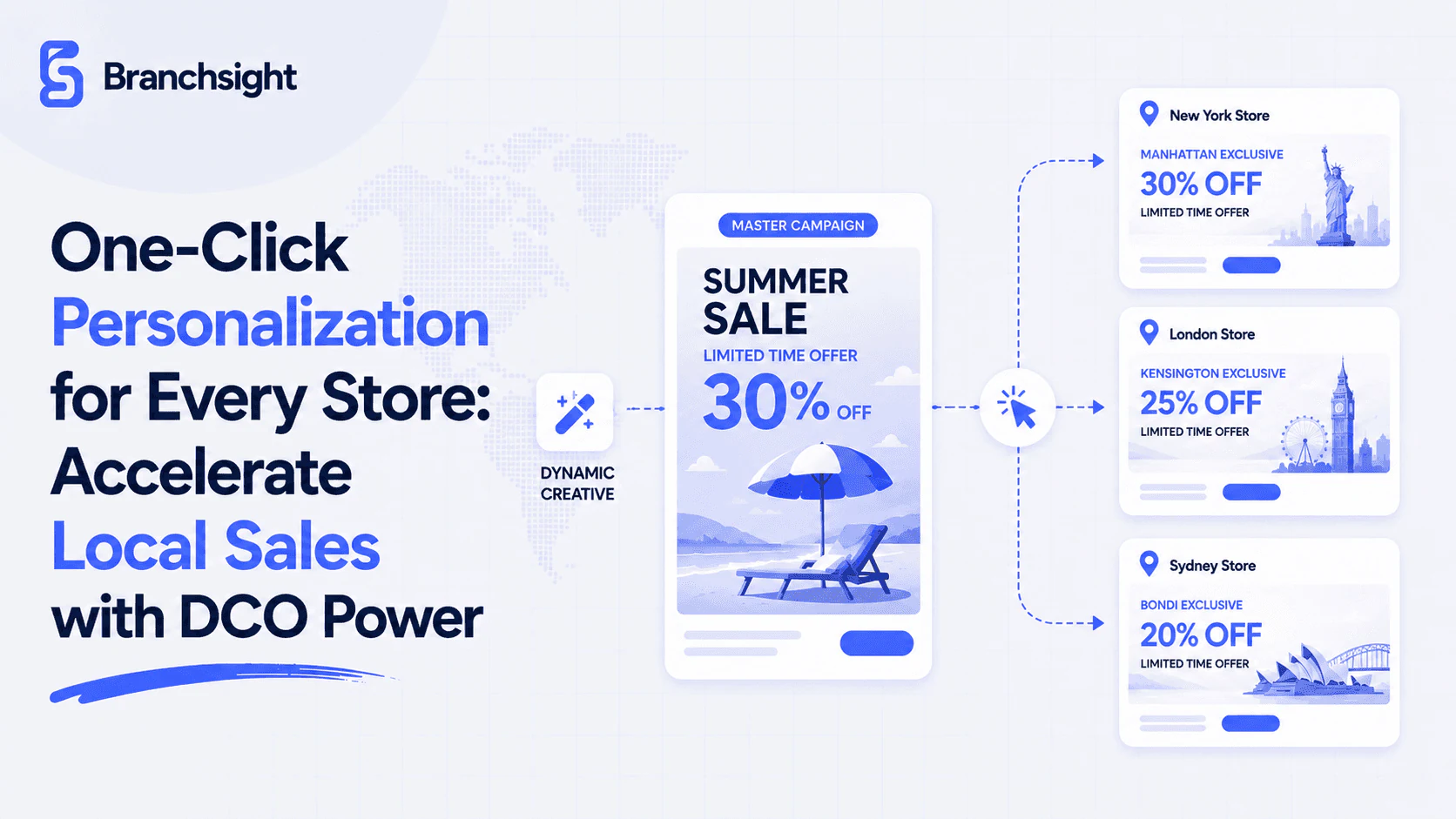
Rather than treating every location as part of a single, uniform campaign, store-level marketing views each branch as an independent marketing ecosystem with its own audience, competition, and opportunities.
However, manually managing campaigns for hundreds of individual locations quickly becomes an operational nightmare.
That's why local marketing automation has become essential. Through a centralized platform, brands can launch geographically tailored advertising campaigns for every location within seconds while maintaining full control over messaging, budgets, and brand consistency.
Regional campaign management also enables marketers to develop communication strategies tailored to local consumer behaviors without sacrificing corporate identity. Dealers can promote location-specific offers while preserving approved brand colors, typography, logos, and messaging across every campaign. Alongside paid advertising, businesses should never overlook the organic side of local visibility.
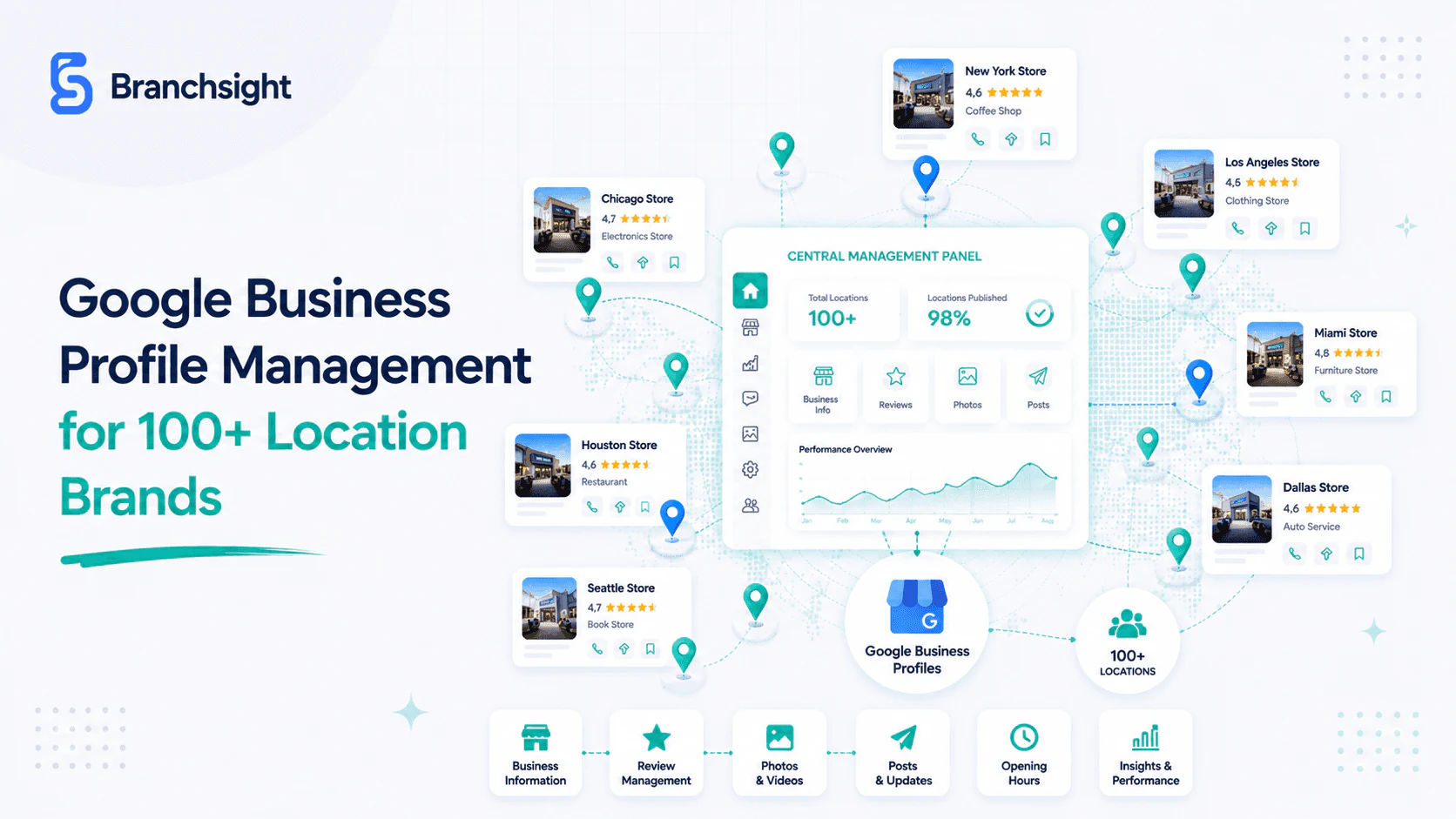
An optimized Google Business Profile, supported by accurate business information, updated opening hours, high-quality images, and customer reviews, plays a critical role in improving local search rankings and building customer trust.
Achieving Digital Marketing Alignment Across Dealer Networks
One of the biggest challenges within dealer and franchise systems is maintaining alignment between headquarters and local partners.
Corporate marketing teams often produce standardized content that fails to resonate with local audiences, while independently created dealer campaigns may unintentionally damage brand consistency through unapproved messaging or visual identity. The solution lies in centralized local marketing platforms.
Modern marketing automation systems allow dealers to launch professional campaigns without requiring expertise in digital advertising, graphic design, or agency support.
Using pre-approved brand templates, dealers can create localized social media advertisements in just a few clicks while remaining fully compliant with corporate branding guidelines. At the same time, headquarters gains complete visibility across the network.
Managing every campaign through a single platform eliminates data silos, improves collaboration, enables real-time performance tracking, and helps maximize the return on local marketing investments across thousands of locations.
Holistic Strategies for Distributors and Multi-Tier Networks
Complex business ecosystems involving manufacturers, regional distributors, wholesalers, and retailers require a broader digital marketing strategy that supports both B2B and B2C audiences. A successful retail location strategy begins with analyzing digital footprints, regional search demand, and consumer behavior to identify which locations offer the greatest sales potential before campaigns even begin.
Within a multi-location marketing framework, advanced hyperlocal targeting helps clearly define each partner's service area.
This prevents internal competition between dealers while ensuring that every location reaches the right audience within its own territory, maximizing efficiency across the entire distribution network.
Driving Growth Through Local Performance Optimization
Building sophisticated marketing campaigns is only the beginning. The real competitive advantage comes from understanding how those campaigns contribute to measurable business outcomes. Today's local performance marketing strategies focus less on impressions and more on meaningful customer actions.
By continuously monitoring these conversion signals and running regional A/B tests, brands can optimize campaigns in real time and allocate budgets toward the locations generating the highest return on investment. When location-based technologies and dealer marketing automation become part of your overall business strategy, your brand doesn't just improve its digital presence—it strengthens its competitive position in the physical marketplace as well.