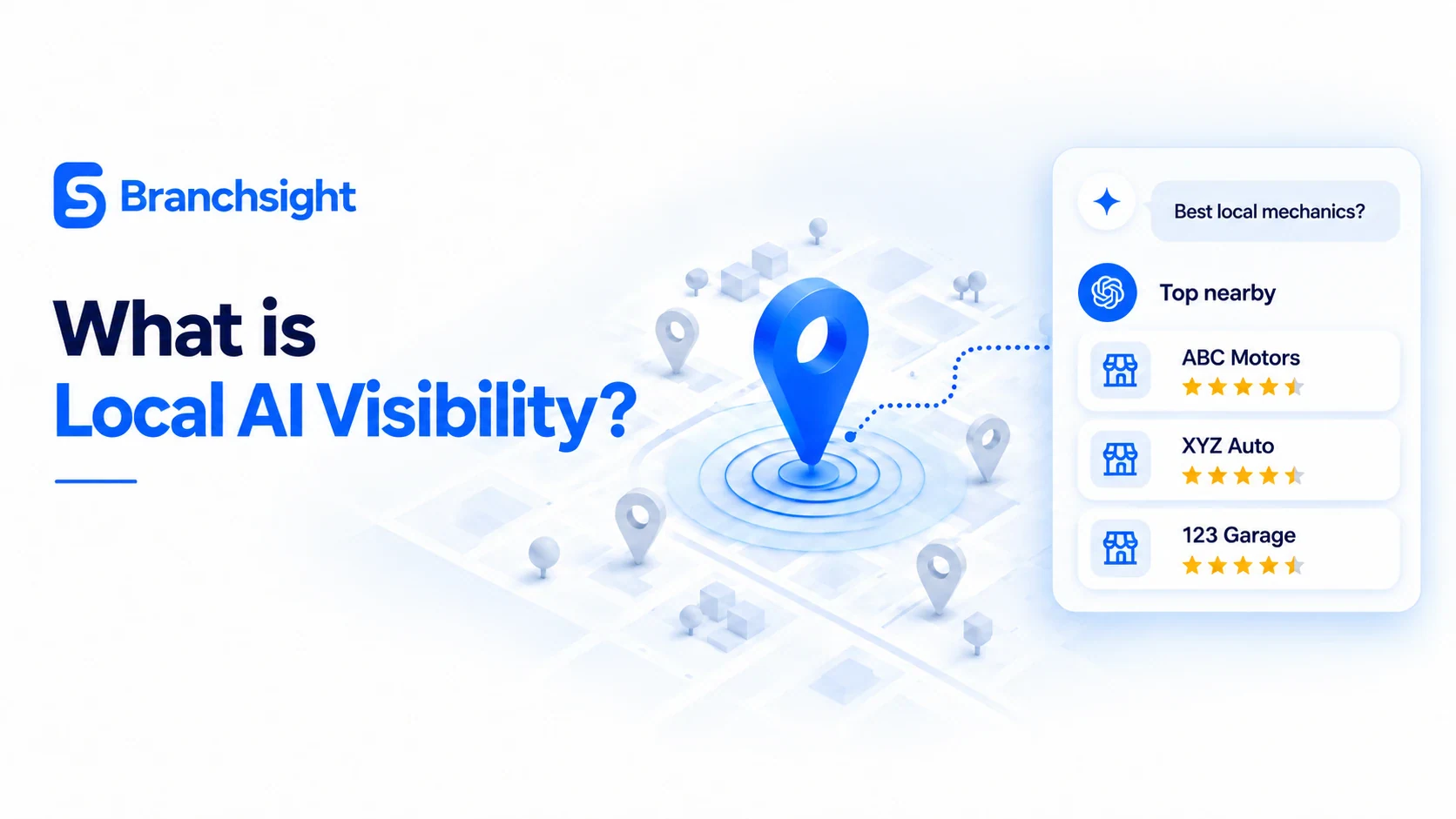
Local AI visibility refers to a business's capacity to be surfaced as a "local recommendation" by AI-powered search tools and chat assistants.
The tools in question include voice assistants, AI-powered search engines, and general-purpose chat assistants. Instead of a traditional list of search results, these tools respond to user queries containing phrases like "near me," "best," or "can you recommend" with a direct answer or a short list of suggestions. Users no longer choose from among ten links; the AI names a few businesses, and the user most likely proceeds with one of them.
49% of users now use AI chatbots on a regular basis — up from just 33% in 2024 and 23% in 2023. Even more striking, 60% of adults read the AI summaries that appear in search results (Pew Research Center, "Americans and AI 2026").
How Is It Different from Traditional Local SEO?
Traditional local SEO relies largely on the following elements:
These elements still matter a great deal; however, AI models operate on a different logic when generating results. While search engines evaluate your page through technical signals (title tags, page speed, backlink profile), AI models try to form a holistic "understanding" of your business by pulling together reviews, news, social media posts, and directory listings scattered across the internet.
This difference in logic is also reflected in user behavior: studies show that when an AI summary appears, users click through to a traditional result only 8% of the time; without a summary, that rate rises to 15%. In other words, once the AI layer kicks in, users often make their decision without ever visiting your site (Pew Research Center, 2026).
Where Do AI Models Get Their Local Business Information?
An AI model doesn't draw on a single source when discussing a business. Generally, it draws on sources such as:
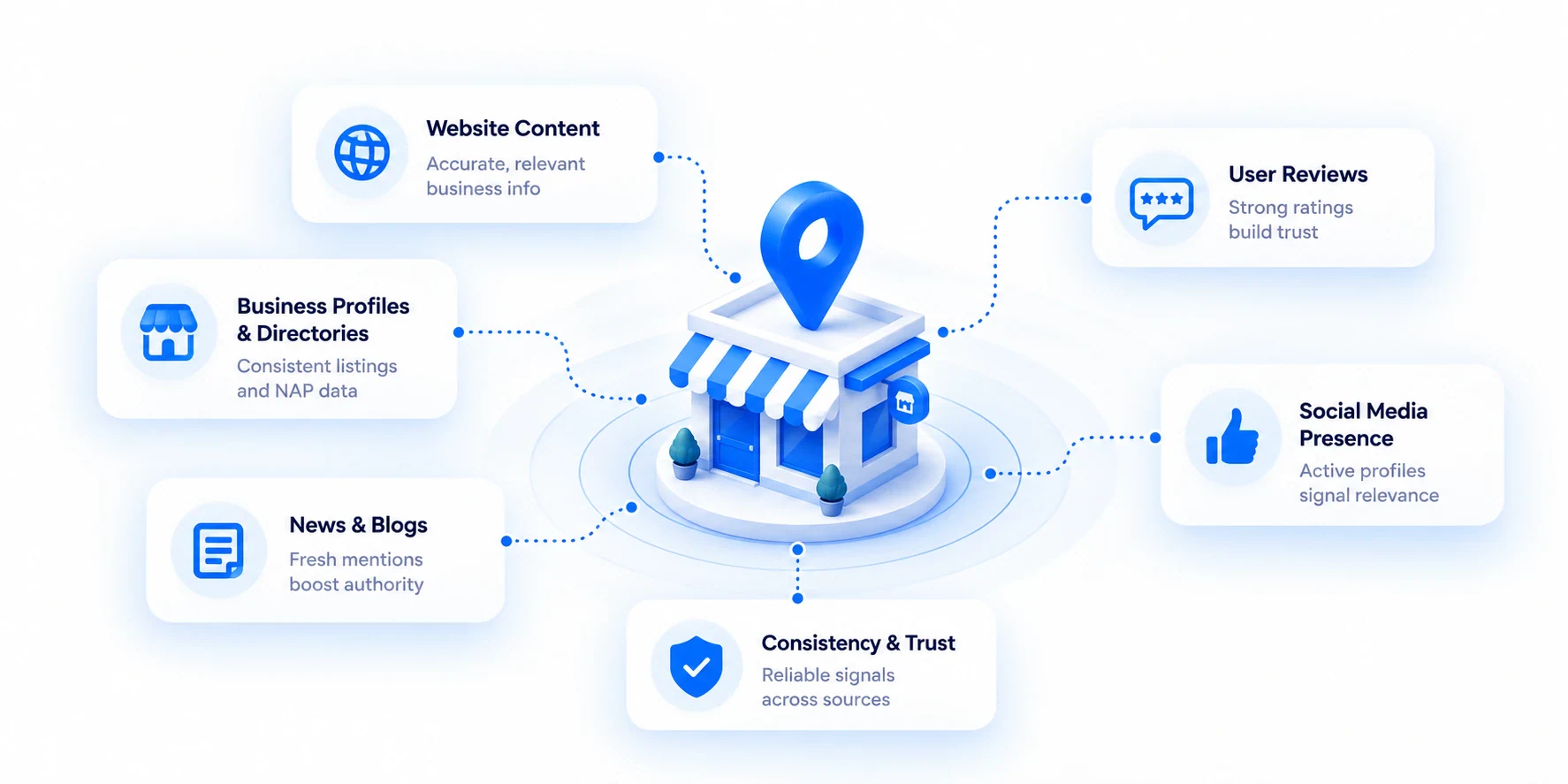
The underlying principle is this: the more consistent, clear, and multi-sourced the information a model finds about you, the more confidently it can recommend you. If the information is missing or contradictory, the model either won't recommend you at all or will hedge with very cautious language.
Conclusion
The share of AI tools within everyday searches is growing fast, and these tools give users a single answer — the business that ranks second often doesn't get a turn at all. A few independent data points illustrate how fast this growth is:
For this reason, local AI visibility isn't replacing traditional SEO — it's becoming a new layer that needs to be added alongside it.