Digital Marketing for Multi-Location Brands: Winning Local Competition with Global Power
Lokal Pazarlama
March 23, 2026
Update:
Mar 24, 2026
Managing a single store in the digital world is relatively easy; but what if you have 50, 100, or 1000 different physical branches to manage?
While nationally broadcast, massive-budget campaigns with uniform brand awareness provide prestige, they fall far behind the competition when they cannot directly respond to local consumers' "near me" searches.
Today, consumers are not looking for generic messages; they seek personalized, location-specific offers and physical solutions they can instantly step into and reach. In an era where the "ROPO" (Research Online, Purchase Offline) trend is at its peak, you must combine your brand's national power with the agility of your local stores. Digital marketing for multi-location brands is no longer a luxury; it is the most important way to keep your physical store traffic alive and growing.
1. What is Multi-Location Digital Marketing and Why is it Different?
Multi-Location Marketing is the execution of region-specific, localized strategies for every physical branch, dealer, or franchise a brand owns. The core philosophy of this approach is to develop a communication language suited to the demographic and cultural dynamics of each region while centrally protecting the brand identity, tone, and quality.
The Difference Between National Campaigns and Local Campaigns
National campaigns are strategies where the entire budget pool is delivered from a single center to massive audiences, such as nationwide or region-wide, with a standard message. While they are a powerful tool for building brand awareness, they fall short in responding to the instant needs of local consumers and regional trends. Local campaigns, on the contrary, segment the target audience and competition at a micro-level, allowing each branch to directly touch the consumer in its own region with a specific offer.
For instance, the competitor analysis, customer profile, and peak hours of a branch in Istanbul Nisantasi are completely different from the dynamics of a branch in Antalya Muratpasa. While a national campaign ignores this massive difference and presents the same visual to both audiences, a local campaign grants the freedom to appeal to each branch in its own language with an offer specific to its own target audience.
Digital Marketing for Dealership Systems and Franchise Marketing Dynamics
The biggest handicap encountered in dealership and franchise systems is the fine line between protecting brand integrity and giving marketing initiative to local branches. Franchise marketing dynamics require a personalized technological infrastructure that is strictly audited from the center but can flex on a branch basis.
While the central team provides approved creative templates, budget limits, and the general communication strategy; dealers must be able to adapt these templates into hyper-local messages for potential customers in their regions. This is an impossible operation to manage manually for hundreds of dealers without a central software or mobile application infrastructure.
2. Location Targeting Strategies for Dealers
A successful multi-location marketing setup starts not with reaching massive audiences, but with drawing the right consumer to the right store at the exact moment their purchase intent is highest.
Local Search and Organic Visibility
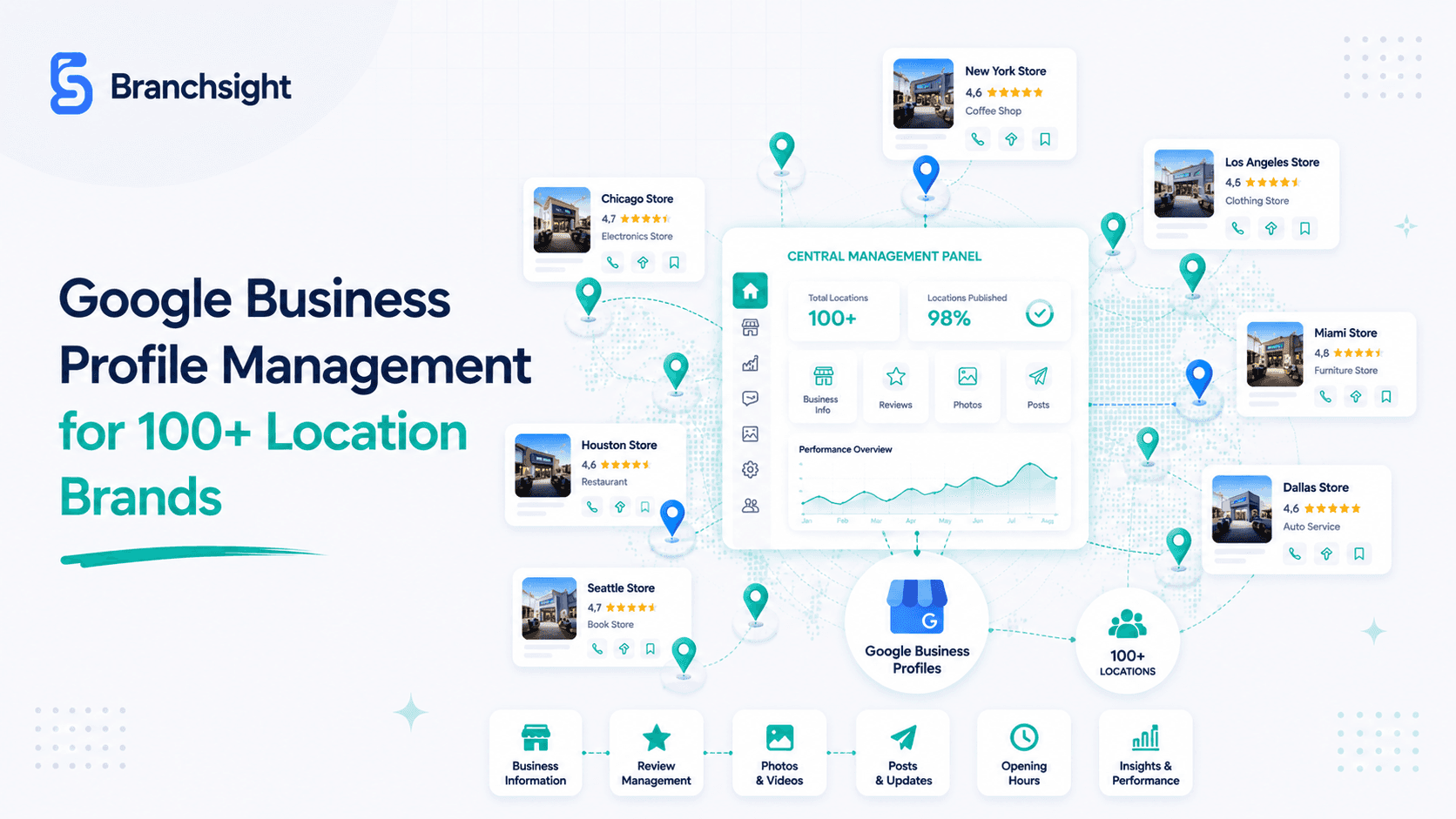
A large portion of modern consumers perform map and search engine queries ("coffee shop near me", "best gym in Kadikoy") from their smartphones before entering a physical store. Creating a fully optimized Google Business Profile for each dealer is the heart of local SEO.
NAP Consistency: Having Name, Address, and Phone information exactly the same, down to the last punctuation mark, across all platforms.
Review Management: Instantly tracking and responding to thousands of reviews received by hundreds of branches from a central system. Keeping business profiles alive in this way directly increases organic visibility and, consequently, free store traffic.
Channel-Based Local Ads and Local Targeting Strategies
Running broad match ads nationwide on platforms like Google Ads, Meta (Facebook/Instagram), and TikTok is a serious waste of budget. Instead, the following strategies should be applied:
Local Search Network Ads: To capture moments of high purchase intent, local campaigns should be launched with specific keywords that will trigger the branch closest to the user's location.
Social Media Awareness: To create store awareness among local residents, audiences should be targeted based on their interests and local trends.
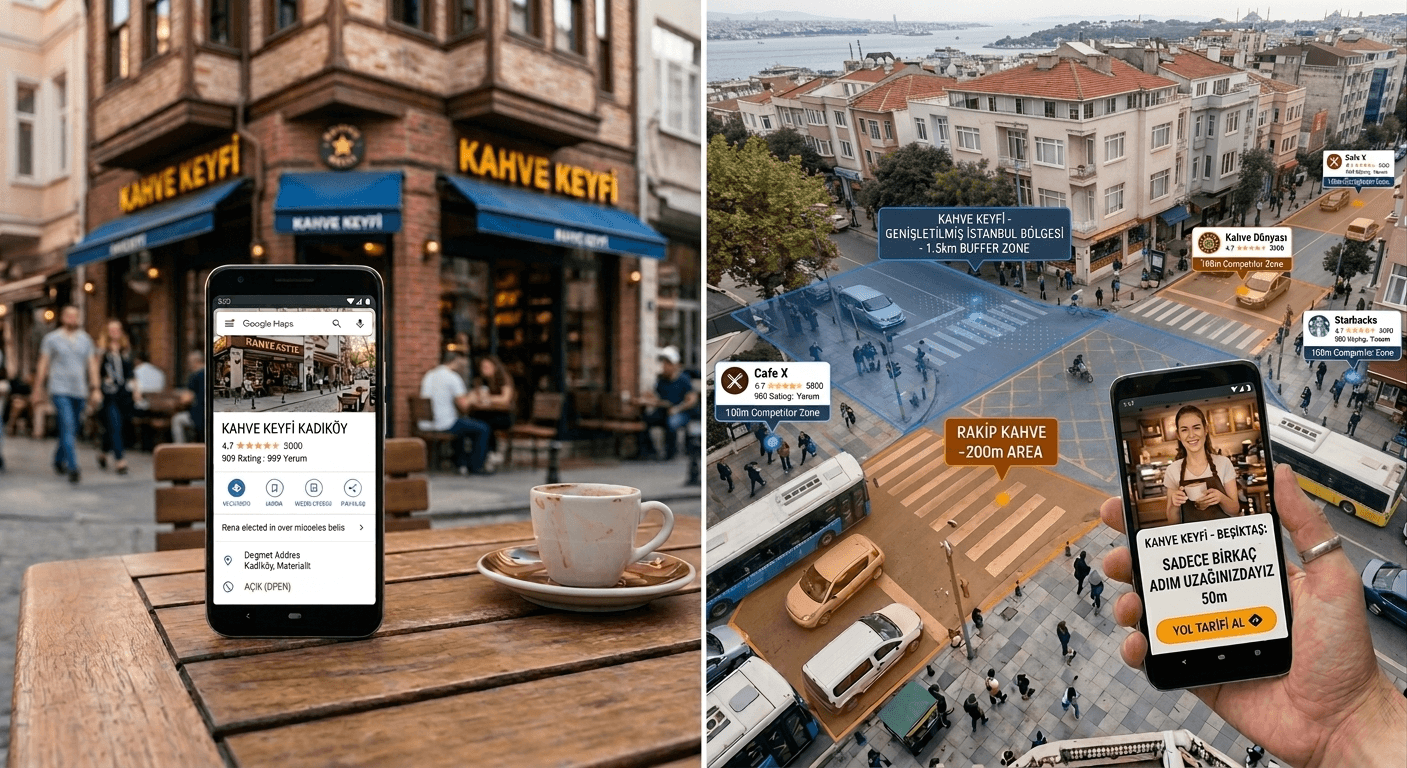
Radius Targeting: Pinpoint audiences should be reached by setting specific radiuses, such as 1 km, 3 km, or 5 km (depending on the region's pedestrian or vehicle traffic), around the coordinates where each branch is located.
3. Hyper-Location Marketing: How to Do Micro-Region and Proximity Targeting?
Hyper-location strategies, the most advanced and aggressive form of location-based digital marketing, literally invite potential customers through the store doors. They even turn them away from your competitors' doors. At this stage, depending on the targeted distance, two different technologies come into play:
Regional Targeting with Geo-Fencing (500m - 5km)
Geo-fencing is drawing a virtual boundary around a physical store or a competitor's branch on a digital map, primarily using GPS and cellular network technologies.
Why Should You Do It?
Targeting only the city of "Ankara" or the "Cankaya" district is too broad and costly. However, using GPS data to tell people within just a 500-meter radius of your store, "We're right on the back street, your dessert is on us with your coffee today!" maximizes conversion rates. Especially by targeting a 500-meter to 1 km radius around competitor stores, you can draw their customers to your own store with attractive offers.
How to Do Micro-Region Targeting?
When setting up micro-region targeting, store coordinates (latitude/longitude) are uploaded to the advertising platforms' panel, and narrow areas are defined around them. However, technical targeting alone is not enough; localized content production is essential. Texts that refer to the cultural codes, weather conditions, or the current traffic situation of the targeted micro-region dramatically increase the likelihood of the user reacting to the ad.
4. Why is it Important to Localize Content?
The golden rule of digital marketing is "Relevance". The consumer wants to feel that the message they see on their screen touches their own life, their own neighborhood, or their own daily problem.
Increasing Engagement with Localized Social Media Ads
Presenting a flawless but cold campaign visual prepared by a global creative agency with the same text from Edirne to Kars creates "banner blindness" in the consumer. Instead:
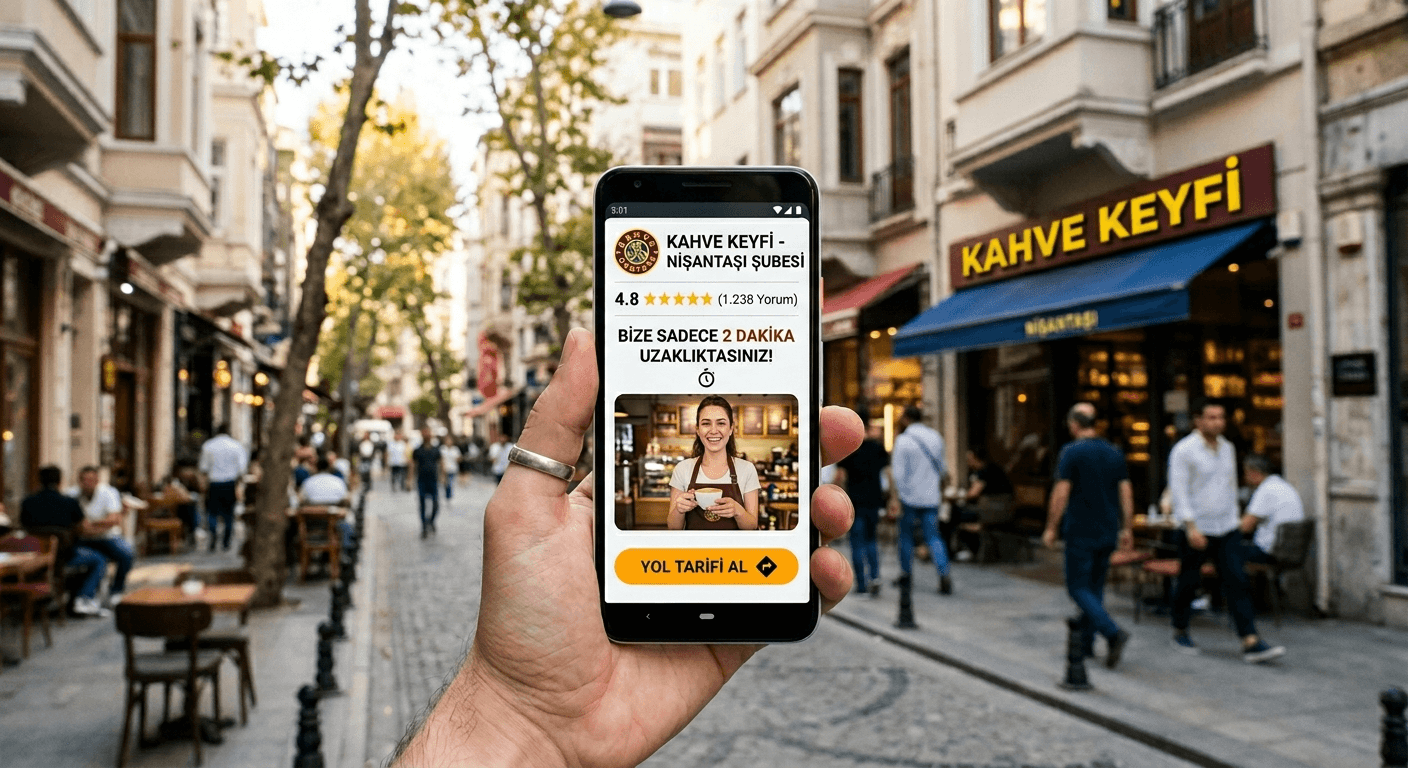
Using the name of the specific neighborhood or street where the branch is located in the ad text ("For Kadikoy Moda residents..."),
Offering dynamic deals based on current local weather conditions (like a hot drink discount on a rainy day),
Referring to a local festival or event in the area takes engagement rates to the peak.
The use of local ads ensures that the ad is perceived not as a cold sales effort, but as a sincere, regional, and benefit-oriented announcement.
5. The Difference of Dynamic and Personalized Ad Creatives
Designing separately for hundreds of locations and getting lost in Photoshop files with traditional methods is a serious operational nightmare and a waste of time for marketing teams.
Catching Attention with Localized Ad Creatives
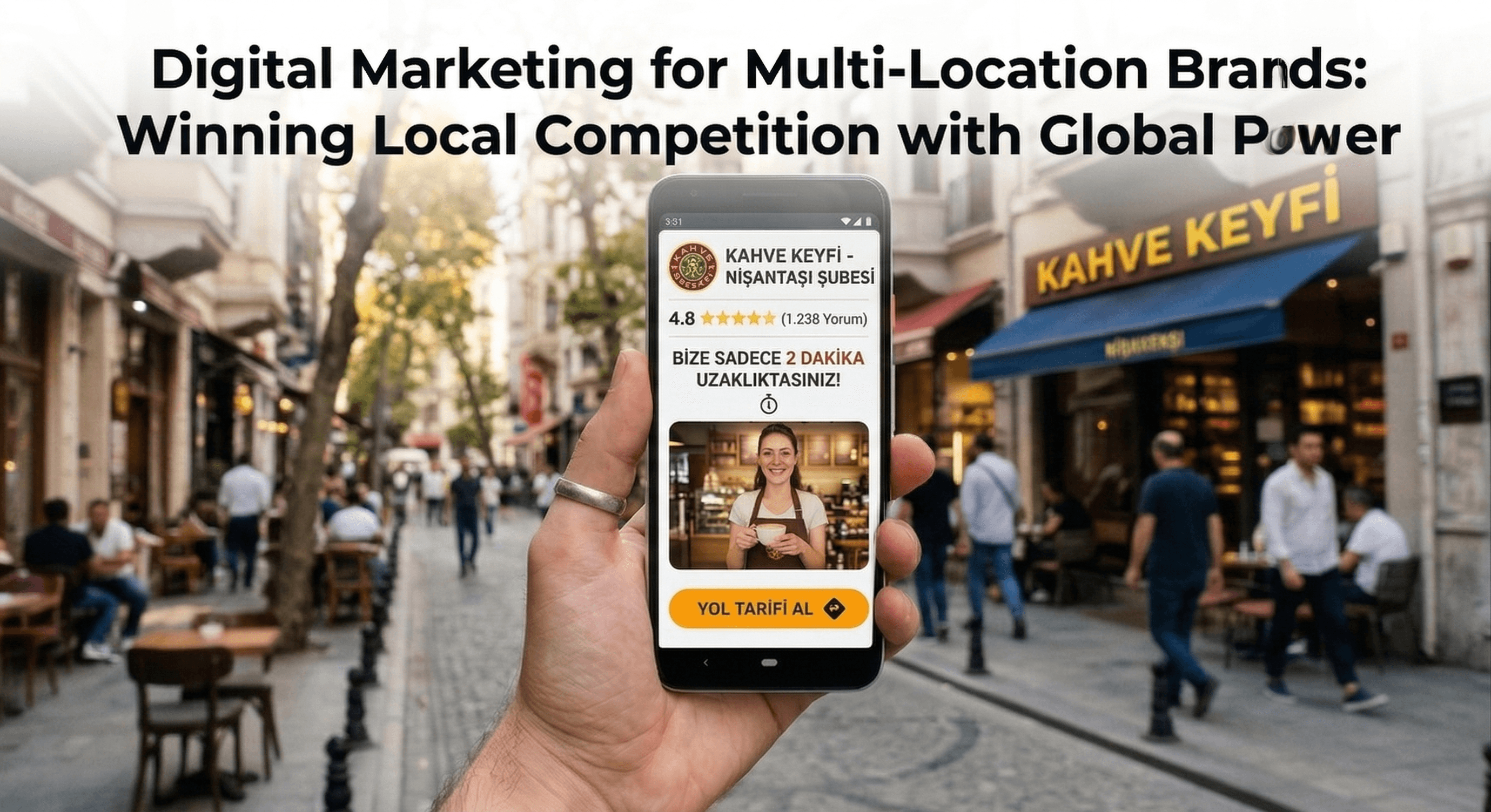
Using localized ad creatives instead of standard, soulless stock images creates a revolution in CTR (Click-Through Rate) metrics. The store's own exterior, a photo of a familiar barista working inside, or a well-known street sign right next to the branch catches the user's attention in a fraction of a second. When the user sees a detail from their own neighborhood that they pass by every day, their finger movement stops, and their eyes automatically focus on that ad.
It is Possible to Build Local Campaign Automation for Hundreds of Branches
So how will a brand with 500 branches manage this localization? Dynamic Creative Optimization and local campaign automation tools come into play here. Thanks to advanced central management platforms, a single master template is uploaded to the system. The system automatically generates and publishes creatives that pull the address, map, store name, and working hours of that region for hundreds of different locations in seconds.
6. How to Measure Local Ad Performance for Dealers?
It is the immutable rule of marketing: You cannot manage what you cannot measure, and you cannot grow what you cannot manage. Success in multi-location brands is measured not only by digital engagement metrics (likes, comments, clicks) but by the tangible traffic the ads bring to the physical store.
Determining Store-Level Marketing Metrics
It is necessary to go beyond general national data and analyze the brand's health with store-based readings. The micro-metrics to track are:
Dealer/Branch specific local ad spend
Local search volume trends and map views
Users' "Get Directions" clicks and "Call Business" metrics to come to the store.
The Impact of Digital Ads on Physical Store Traffic
Measuring the impact of online ads on the offline store is now possible thanks to advanced algorithms. Google and Meta's Store Visits and Offline Conversions technologies can measure whether a user who clicked on or simply viewed an ad later visited that physical store via the location data on their mobile phones (anonymized). Additionally, with POS systems and CRM integrations, how much the person who clicked on the ad spent in the store can be matched.
Measuring Local Performance Marketing
This massive pile of data from hundreds of branches should not get lost in complex Excel tables; it should be collected in real-time on a single central management panel or a mobile app in the pockets of decision-makers.
It should be analyzed which dealer provides a higher Local ROAS (Return on Ad Spend) and in which geographical regions the Cost Per Store Visit is more advantageous. Thanks to this technological measurement, the center maximizes budget efficiency by shifting the marketing budget not blindly, but correctly to the local branches and strategies that bring the most store traffic and revenue.